
Companionship Care
Companionship Care in Scottsdale, From Someone Their Age
The house gets quiet before anything else goes wrong. A parent who used to be out three days a week starts waiting for the phone to ring. Seniors Helping Seniors® in-home care services send someone who wants the afternoon too, and who happens to be their age.
Quick answer
What is companionship care?
Companionship care is regular, non-medical time spent with an older adult in their own home: conversation, cards, puzzles, a walk, a favorite show, an outing, and a familiar face on a schedule they can count on. Seniors Helping Seniors® Scottsdale provides it across Scottsdale, Paradise Valley, Fountain Hills, and the northeast and north Phoenix neighborhoods we serve, from Caregivers who are seniors themselves. Care can start with a few hours a week and grow from there.
Key facts
- What it is
- Regular, non-medical company at home, and an honest eye on how things are going
- How often
- From a few hours a week to daily visits, on a schedule you set
- Who comes
- A Caregiver who is a senior too, the same one whenever possible
- What you get
- A note or call afterward, so you are not guessing between phone calls
- Also covers
- Long-distance check-ins for family who live out of state or across the Valley
- Reach us
- Mon-Fri, 8 AM to 6 PM · 24/7 for emergencies · (480) 674-5400 · info@shsscottsdale.com
The Real Objection
Is it strange to pay someone to be a friend?
It is the question almost nobody asks out loud, so here it is first. Arranging company for your mother can feel like an admission that the rest of the family did not show up enough.
Not strange at all. It's simply a way to make sure genuine companionship happens consistently, even when life gets busy or family lives far away. Because our Caregivers are seniors themselves, the relationship doesn't feel transactional; it feels like getting a little help from your friends®, built on real shared experience rather than a paid checklist. Many families find it's less "paying for a friend" and more investing in regular, dependable connection for someone they love.
The health side of being alone
There is a second reason to stop treating company as a soft extra, and it has nothing to do with sentiment. Being alone is a health question as well as a sad one. The National Institute on Aging puts it plainly.
National Institute on Aging
Adults who are lonely or socially isolated tend to be less healthy, have longer hospital stays, are readmitted to the hospital more often, and are more likely to die earlier than those with meaningful and supportive social connections.
Company is not a treatment, and we will not pretend it is. But a standing visit is one of the very few things a worried family can actually arrange, and it can be arranged without anyone having to call it care.
If a standing visit is the thing to try, the next step is a conversation and not a contract. Call (480) 674-5400 or request a free care visit, and we will work out together what one standing afternoon a week would actually look like.
A Real Visit
What does a companionship visit actually look like?
Ordinary, mostly, and deliberately so.

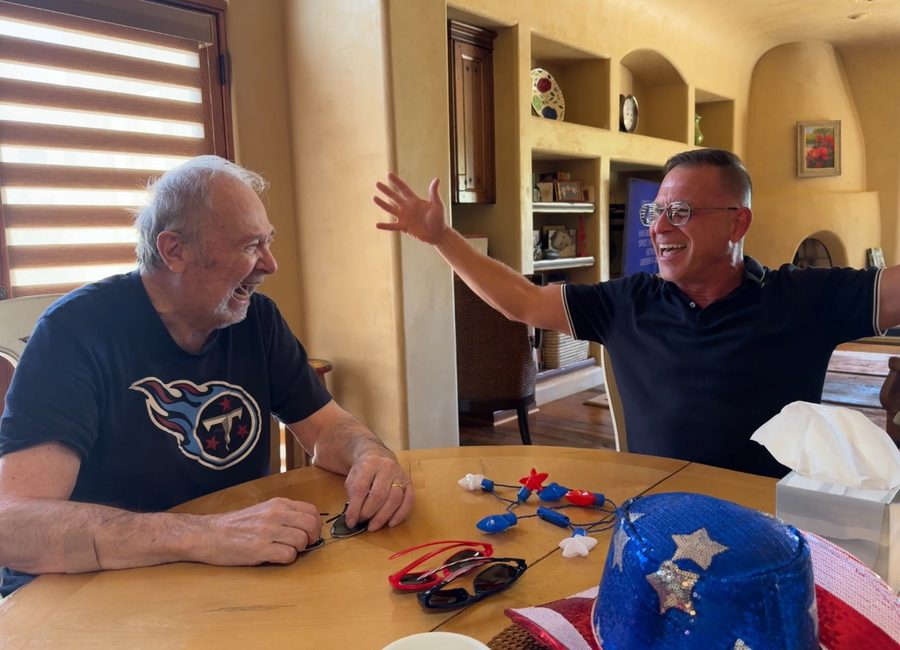
You set the day and the length, and we keep it the same from week to week, because a visit your parent can count on is worth more than a longer one they cannot. The Caregiver arrives as a guest with time on their hands, not as staff on a shift, and the afternoon goes wherever the two of them take it.
Some weeks that is the crossword and the kettle. Some weeks it is the whole story about the boat again, which is fine, because the Caregiver has one of those too. On the services page we call this companionship and socialization.
And if you are the person currently doing all of this yourself, on top of everything else, then the same afternoon has a second name and a second purpose. It is called respite care, and it is worth reading about before you decide you can keep going.
What this looks like
- Regular visits your parent can count on, on days you choose together
- Conversation, cards, puzzles, a walk, a favorite show
- Coffee at the kitchen table, or lunch out if they would rather be out
- An errand run together, so it is an outing instead of a chore
- Someone who notices when something is off and tells you
The Match
How do you decide who comes?
This is the whole job. A companion who is wrong for your mother is worse than no companion, because now she has to be polite all afternoon.
So we match before we schedule. At the free care visit we ask about the things that actually decide whether two people enjoy each other, rather than the things that would fit neatly in a file.
What we ask about
- What they did for a living, and what they still like talking about
- Pace: whether they want to walk the block or sit on the patio
- Cards, crosswords, gardening, baseball, church, the news, the dog
- The time of day they are at their best
- Whether they want a talker, or someone comfortable with quiet
Then we send the same Caregiver back, week after week, because almost all of the value is in the repetition. Two strangers being introduced to each other every Thursday is a different thing entirely, and a worse one.
A wrong match is fixable, and we would rather fix it early. You do not need a reason and it is not a complaint. Say the word to Andy or his staff on (480) 674-5400 and someone else comes out. The version of this that fails is the one where nobody mentions it for four months.
The Quiet Part
Who tells you when something changes?
A phone call gets you the version your parent would like you to have. Someone standing in the kitchen gets you the real one, kindly, and without turning it into an event.
-
The fridge, the mail, the mood
A regular visitor sees what a weekly call cannot: food bought and not eaten, mail stacking up, a walk that keeps getting shorter, a mood that has flattened out. None of it comes up in the Sunday phone call, because none of it feels worth mentioning.
-
A note or call afterward
You hear how the visit went: what they did, how it was, anything worth knowing. It takes a minute and it is the difference between wondering and knowing.
-
An early heads-up
When something looks different, you hear about it while it is still small and there are still options, rather than in a phone call from a hospital on a Tuesday night.
If you live in another state, or across the Valley with a calendar of your own, this is the part that matters most. It has its own name, long-distance check-ins, and it is the same Caregiver doing the same visit.
Companionship care from Seniors Helping Seniors® Scottsdale is non-medical. Our Caregivers give medication reminders at the right hour, never doses, and they do not diagnose anything. They tell you what they see and leave the conclusions to your parent's doctor. When the real need is clinical, we will say that instead of selling you hours.
Getting started
How does care start?
Step 1. You call, or book a free care visit.
Call (480) 674-5400 or Request a Free Care Visit. You reach Andy or his staff, not a call center.
Step 2. We visit the home.
About an hour, free, no pressure. We meet your loved one, walk the house, talk routines, and check whether GUIDE or VA benefits might apply.
Step 3. We match the Caregiver.
Personality, interests, pace, schedule. First visits usually happen within days, and we check in afterward to make sure the match fits.
FAQ
Questions families ask about companionship care
How often do companionship visits happen, and can we start with just a few hours?
You set the schedule. Care can start with one visit a week and grow to several days, a full day, or daily company, and the plan can be revisited as needs change. A standing block on the same days each week is the easiest to staff, and it means the same Caregiver keeps coming back, which is where most of the value is.
My parent says they do not need company. What then?
Start with something that is not about them. A hand with the garage, a ride to the store, someone to watch the game with. Our Caregivers are seniors themselves, so a first visit can be two people of the same age doing something ordinary rather than a care appointment. Whether that lands is mostly a question of who we send, which is what how we decide who comes is about.
Will the same Caregiver come every time?
That is the goal, and it is why we ask for a standing schedule rather than a call whenever you need one. The same Caregiver week after week is what turns a visit into a friendship, and it is also what makes a small change easy to spot, because you have to know how someone usually is to see that today is different. If your regular Caregiver is unavailable, we aim to tell you who is covering rather than send a surprise.
I live out of state. How will I know how my parent is really doing?
That is what long-distance check-ins are for, and they are part of the same service rather than an extra you buy on top. What a regular visitor actually sees, and what gets passed on to you, is set out in who tells you when something changes.
Can a companionship visit include a drive to lunch or an errand?
Often the outing is the point, and time out of the house is part of what a visit is for. Where the outing needs a car, that is our transportation service, and the two can sit in the same afternoon. Tell us on the call what you have in mind and we will say which one it is and what it costs, rather than let you find out from an invoice.
Is companionship care medical, and can a Caregiver help with medication?
Companionship care is non-medical. Our Caregivers give medication reminders at the right hour, never doses, and they do not provide nursing or therapy. What they do is notice, and tell you what they noticed, so you can raise it with the people who can act on it.
Companionship care from Seniors Helping Seniors® Scottsdale is non-medical and does not replace your loved one's doctors or care team. Nothing on this page is medical advice or a diagnosis. If you are worried about a sudden change in someone's health, call their doctor.
 Andy Lask, Owner Meet Andy →
A Standing Visit
Give them something to look forward to.
Two questions on the call: who is your parent, and what does a good afternoon look like for them. Everything after that is scheduling, and the cost comes up on the same call rather than later.
Nothing has to be decided on the first call. The care visit that follows is exactly what it sounds like: about an hour, at their kitchen table, free.
There is no form to fill out. Andy and his staff answer Mon-Fri, 8 AM to 6 PM, and 24/7 for emergencies. Emails get a reply in under 4 hours.