Serving Scottsdale · Paradise Valley · Fountain Hills · Tempe · Northeast Phoenix Mon-Fri, 8 AM to 6 PM · 24/7 for emergencies · (480) 674-5400

Become a Caregiver

You have been looking after people your whole life. Get paid for it.

Caregiver work in Scottsdale with Seniors Helping Seniors® in-home care services, which began from one idea: the person who understands what it is like to be eighty is usually somebody who has lived a while themselves. This office staffs accordingly, and the work is company, a meal, a ride, and a steady arm when it is wanted.

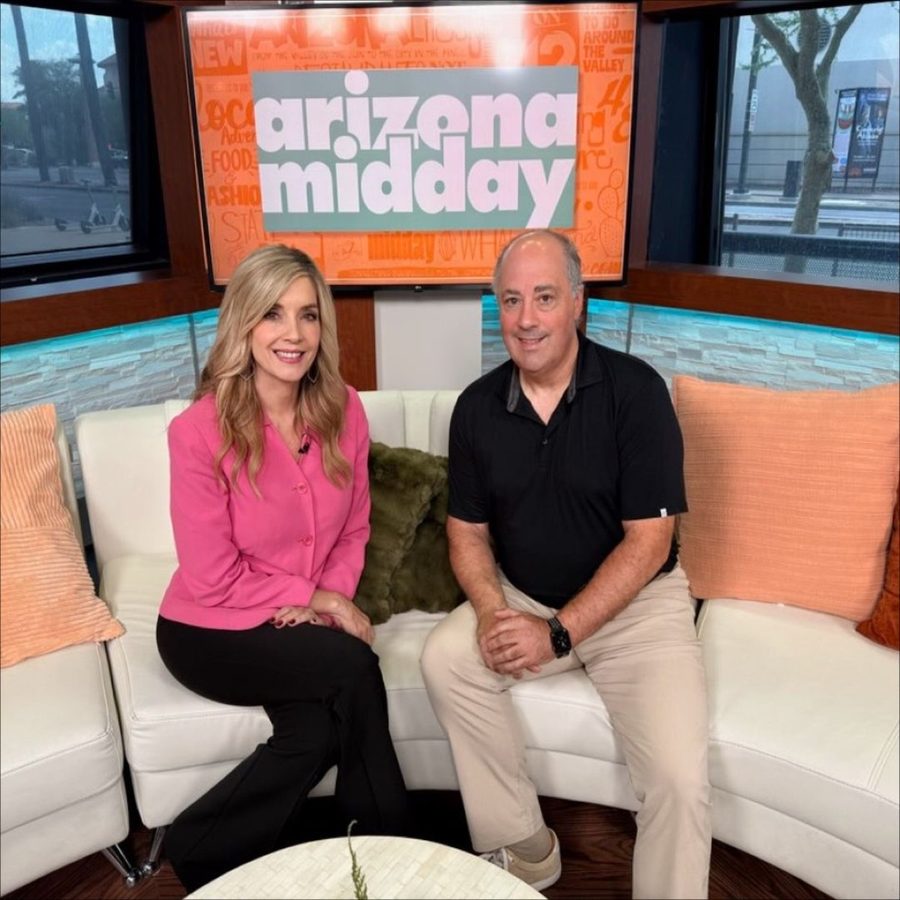
Andy Lask on the 12News Arizona Midday set, being interviewed beside the show's host
Andy on 12News, on why hiring older workers benefits everyone. Watch the feature

Quick answer

What is the Caregiver job, and who is it for?

A Seniors Helping Seniors® Scottsdale Caregiver spends a visit at a time with one older adult in their own home: company and conversation, a meal, light housekeeping, errands and rides, and a steady arm with the parts of the day that have got harder. The work is non-medical, which means care rather than nursing, and this office is built on the belief that a Caregiver who is a senior themselves does it better. Applications go through Augusta, the outside service that handles our Caregiver vetting.

Key facts

The work
Non-medical in-home care: company, meals, light housekeeping, errands, rides, and a steady arm
The model
Many of our Caregivers are seniors themselves, matched to clients by personality, interests, and pace
Where
Scottsdale, Paradise Valley, Fountain Hills, and the northeast and north Phoenix neighborhoods we serve
The office
Locally owned by Andy Lask, open in Scottsdale since January 2022
How to apply
Roughly twenty qualifying questions on Augusta's form, then a time on the office calendar
Ask first
Mon-Fri, 8 AM to 6 PM · (480) 674-5400 · info@shsscottsdale.com

The Qualification

What makes somebody good at this work?

Almost none of it is the sort of thing that fits neatly on an application form. Read the left column as a life and the right column as the job, because that is the whole argument.

  • You raised children

    Then you already know how to stay patient with somebody who is having a bad day and cannot quite say why. That is most of it.

  • You ran a household

    Meals, laundry, the shopping, the bills that pile up by the door. A good half of this work is exactly that, done in somebody else's kitchen and to their standards rather than yours.

  • You cared for your own parent, or your husband, or your wife

    Then you have done the hardest version of this job already, unpaid and with nobody covering your days off. This one comes with a schedule, an office behind you, and somebody to call.

  • You have driven these roads for thirty years

    Getting somebody to an appointment off Shea and home again without turning it into an ordeal is a real skill. Rides are one of the things families ask for most.

  • You held a job, ran a business, taught a class, kept the books

    Turning up when you said you would is the first thing a family notices and the thing they talk about afterwards. It is rarer than it ought to be.

  • You are good company

    Not a soft extra. Being alone all week is the reason a great many of these visits get booked in the first place, so the conversation is the service and not the small talk around it.

And if the honest answer is that none of that sounds like you, this probably is not your job. Far better to work that out on a web page than three weeks into somebody's living room.

The Visit

What does a Caregiver visit actually look like?

There is no ward, no handover, and no cart. There is one house, one person, and a block of hours.

  1. You arrive at a door you have been to before

    Clients and Caregivers are matched on personality, interests, pace and schedule, and the same Caregiver goes back whenever possible. By the third visit you are not a stranger, you are the person who knows where the good mugs are kept.

  2. You talk first

    Cards, an old film, the crossword, the garden, or the same argument about the same ball team. Our companionship visits are built entirely around this, and it carries into every other kind of visit too.

  3. You do the ordinary things

    Lunch made in their kitchen the way they have always had it. The laundry, a wipe round the bathroom, the pharmacy run, the birthday card that has to go out today. See meals and shopping and housekeeping and errands for the version families read.

  4. You give a hand where it is wanted

    A steady arm out of the chair, a hand into the shower, a word that it is nine o'clock and the pills are on the counter. Reminders, never doses. This is personal care, and it is done at the client's pace and on the client's terms.

  5. You notice

    The rug that slides, the bulb that has been out a week, the sandwich in the bin untouched. You tell the office and the office tells the family, which is often how a small thing gets fixed before it becomes a fall.

  6. You go home, and somebody's day was better than it would have been

    Said plainly, because that is the job. Some days it is a shower and a chicken sandwich. Some days it is the only conversation they will have all week.

The Model

Why does this office want Caregivers who are seniors themselves?

The name is not a slogan, it is the staffing model. Shared life experience is not treated here as a consolation prize for a shortage of clinical training. It is the thing that makes the visit work, which is why the office goes looking for Caregivers who are seniors themselves rather than treating it as a happy accident when one turns up.

A client will say things to a contemporary that they will not say to somebody their granddaughter's age. They will accept a hand from a peer that they would refuse from a stranger of twenty-five, because taking it does not feel like being handled. And the references land: the same songs, the same jokes, the same view about how a kitchen ought to be run.

Andy Lask made that case on television. In October 2025 he was on Arizona Midday, the lifestyle show on 12News, the Valley's NBC station, for Employ Older Workers Week, talking about exactly this. Read about the segment and watch it, then decide whether the argument holds. It is a better use of five minutes than any recruiting copy.

It is worth saying what the model means for you rather than for the client. Caregivers are matched to the people they visit on personality, interests, pace and schedule, and the office follows up after the first visits to check that the match fits. That is a different proposition from being an interchangeable name on a roster. Meet Andy and the team you would be working with.

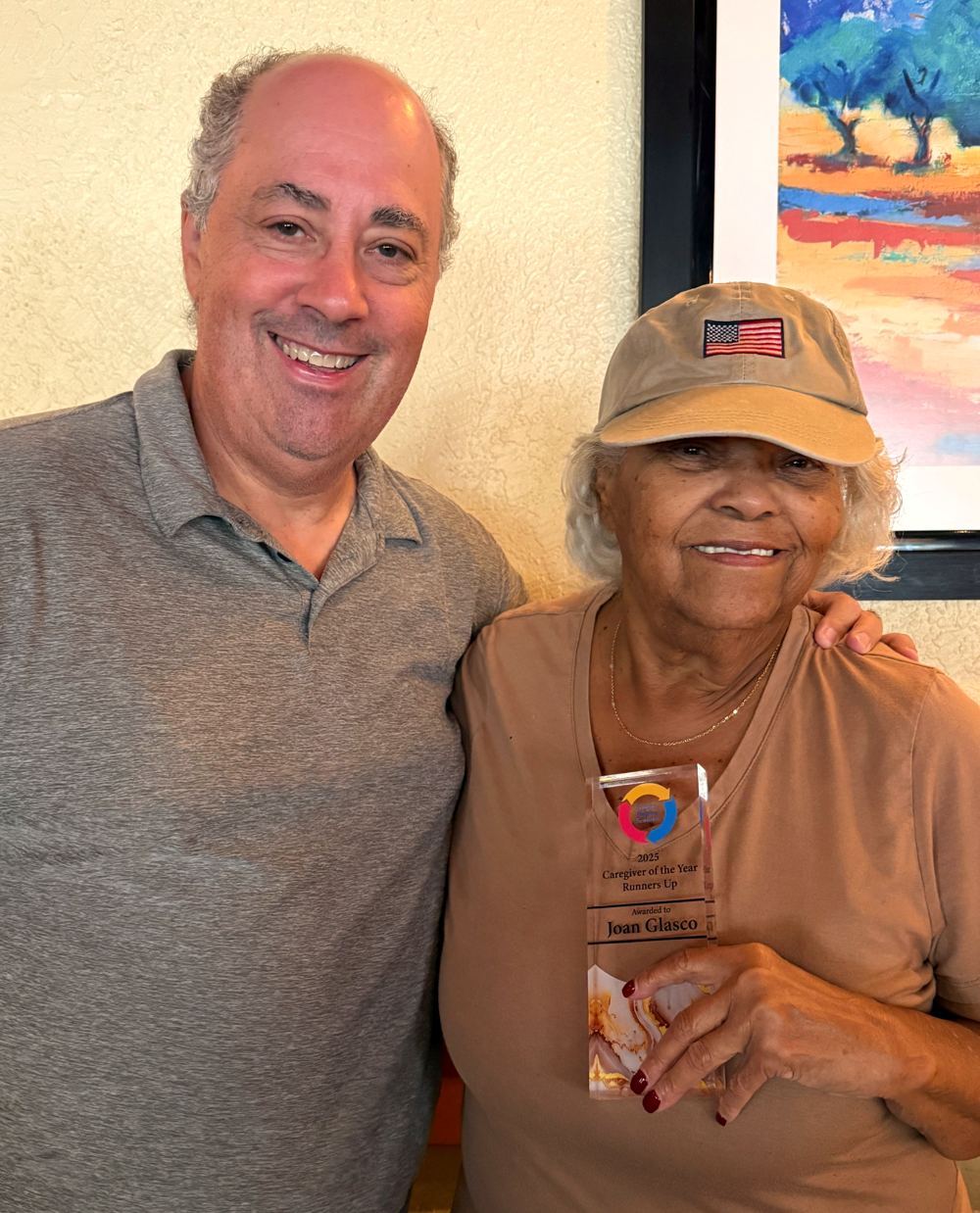
Andy Lask standing with Caregiver Joan Glasco, who is holding her 2025 Caregiver of the Year Runner-Up plaque
Joan Glasco, 2025 Caregiver of the Year Runner-Up at the Seniors Helping Seniors® 2025 International Franchise Convention, with owner Andy Lask.

Applying

How do you apply, and what happens next?

Two steps, and neither of them is a cover letter.

Step one

Augusta's questions

Applications for this office are handled by Augusta, an outside service that carries out our Caregiver vetting. Their form runs to roughly twenty qualifying questions. Answer them honestly rather than impressively: the point of the questions is to work out whether this fits, and a form that flatters you into the wrong job has done nobody a favour.

Step two

A time on the calendar

When the form is done you can book a time on the office's calendar. That is the point at which you stop dealing with a website and start dealing with Scottsdale. Bring the questions the form did not ask you, because that is what the time is for.

Five things this page will not tell you, and why

  • What the work pays, and how it is paid.
  • How many hours there are, and how they get set.
  • Whether you need your own car.
  • What training there is, and what is expected before you start.
  • What employment status the role carries.

Every one of those is a real answer and it belongs in a real conversation. Printing a number on a web page that turns out not to be yours would be worse than printing nothing, so we have printed nothing. Call and ask instead. Andy or his staff will tell you straight, and asking does not start an application or put you on a list.

Call (480) 674-5400 or email and we will reply in under 4 hours

FAQ

Questions people ask before they apply

Do I need a medical background to be a Caregiver?

The work itself is non-medical. Our Caregivers give medication reminders rather than doses, and they do not provide nursing, wound care, injections, or therapy of any kind. What the day asks for is patience, reliability, and the ordinary competence of somebody who has run a household. Whether any particular training or certificate is expected is a question for the office rather than for a web page, so call (480) 674-5400 and ask before you rule yourself out.

How do I apply to become a Caregiver in Scottsdale?

Applications are handled by Augusta, an outside service that carries out Caregiver vetting for this office. You answer roughly twenty qualifying questions on Augusta's form, and from there you can book a time on the office's calendar. If you would rather speak to a person first, call (480) 674-5400. Asking questions on the phone does not start an application and does not commit you to one.

What does a Caregiver actually do on a visit?

One person, in their own home, for a block of time. Company and conversation, a meal cooked in their kitchen, the laundry and a wipe round the bathroom, the pharmacy run and a ride to an appointment, medication reminders, and a steady arm with standing, walking, bathing and dressing. It is the same list families read on our care services pages, done one house at a time rather than a floor at a time.

Where would I be working?

Across Scottsdale, Paradise Valley, Fountain Hills, and the northeast and north Phoenix neighborhoods we serve. Most visits happen in private homes, and some happen in assisted living or independent living, where a family has added our hours on top of what the community already provides.

What does the job pay, and how many hours would I get?

Those answers are not on this page, on purpose. Pay, hours, schedule and employment terms come from the office directly, because a number printed on a web page has a way of turning out not to be yours. Call (480) 674-5400 and ask, or raise it when you book a time after Augusta's form. Nobody here will be annoyed that money was your first question.

Seniors Helping Seniors® Scottsdale is an independently owned and operated franchise, and Caregiver applications are handled by Augusta, a separate vetting service. Nothing on this page is an offer of employment, and nothing here states pay, hours, benefits, or terms of engagement. Those come from the office, in a conversation.

Andy Lask, OwnerMeet Andy →

Work Worth Doing

Somebody in Scottsdale is waiting for the company.

If you have read this far, you are already doing the thing the job needs, which is taking somebody else's week seriously.

Start the application, or call first and ask us anything. Both are the right way round.

There is no form on this website. Applications go to Augusta, and everything else is a phone call or an email. Andy and his staff answer Mon-Fri, 8 AM to 6 PM, and emails get a reply in under 4 hours.

Call (480) 674-5400 Free Care Visit